
 Image 1 of 1
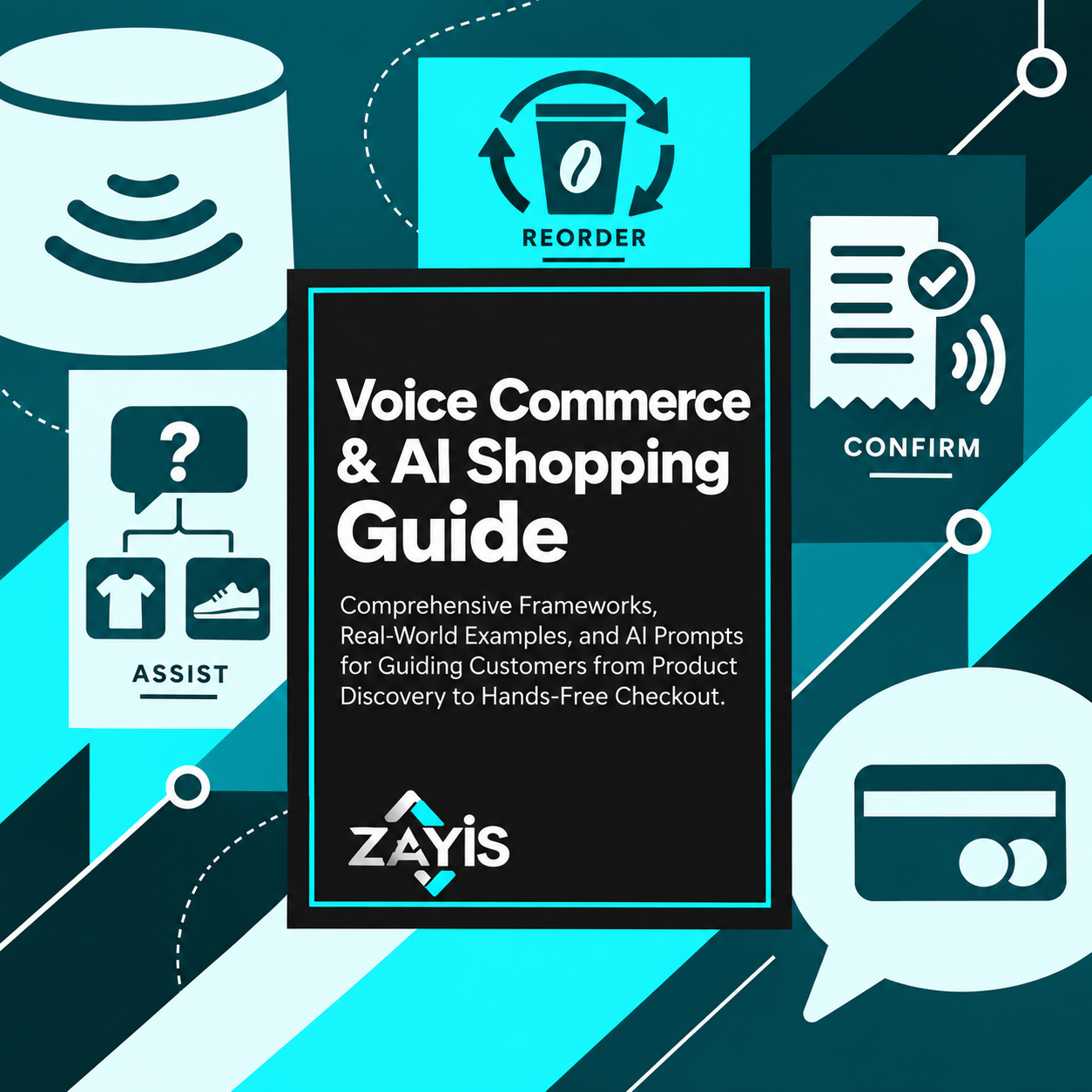
Voice Commerce & AI Shopping Guide
Shopping is becoming more conversational. Customers can ask questions, compare products, request recommendations, and explore purchases through voice and AI-assisted interfaces. Is your business prepared to communicate its products in a way those systems can understand?
Imagine a customer asking for a product recommendation while preparing dinner, driving, or completing another task. They want a clear answer, relevant options, and accurate information about pricing and availability. Can your product descriptions support that conversation? What happens when a customer wants to reorder? And how should an AI shopping assistant respond before a purchase is confirmed?
The Zayis Voice Commerce & AI Shopping Guide helps you explore these emerging customer experiences. Use practical frameworks and structured AI prompts to plan conversational shopping flows, improve voice-friendly product information, and develop customer interactions with appropriate safeguards.
What you can build:
Voice-friendly product descriptions: Rewrite product information into clear, natural explanations that help customers understand features, benefits, options, and important limitations.
An AI shopping assistant conversation: Design a guided interaction that asks relevant questions, compares suitable products, and explains recommendations using verified catalog information.
A voice-activated promotional concept: Develop conversational offers that explain actual eligibility requirements, availability, pricing, and promotional terms.
A spoken FAQ and customer support flow: Organize common questions, prepare concise answers, and establish appropriate escalation procedures when an issue requires human assistance.
A personalized product recommendation and cross-sell plan: Connect customer-stated preferences with suitable products and complementary purchases without inventing information or assuming consent.
A voice-based reorder workflow: Plan how returning customers could identify previous purchases, confirm current prices, review quantities, and authorize a new order.
A hands-free checkout experience blueprint: Map the steps for verifying order details, presenting charges, requesting explicit authorization, and handling errors or unsupported requests.
Put your AI assistant to work with a clearer brief.
Each strategy combines a practical framework, an illustrative example, a copy-and-paste prompt, and implementation guidance. Rather than asking AI to build a voice shopping system from scratch, you can define the customer task, verified product information, supported platform capabilities, and the decisions that require customer confirmation.
Upload the PDF to a compatible AI assistant, describe your products, shopping platform, customer needs, and available technology, then develop one conversation or integration concept at a time. Verify platform support, data permissions, payment procedures, and customer authorization requirements before attempting implementation.
What's included:
A 35-page PDF with 10 voice commerce and AI shopping strategies.
A 90-day Voice Commerce Implementation Plan.
A Voice Commerce Analysis and Action Worksheet.
Frameworks for voice-friendly product descriptions and AI shopping assistant scripts.
Voice-activated promotions, spoken FAQ flows, and conversational cross-selling.
Reorder-by-voice planning and voice-based customer support.
Personalized product recommendation and interactive storytelling concepts.
Hands-free checkout planning with customer confirmation requirements.
Illustrative examples, implementation guidance, and a task-based section finder.
Sources and further reading.
Who it's for: E-commerce businesses, online retailers, product brands, entrepreneurs, customer experience professionals, and developers exploring conversational shopping experiences.
Don't assume customers will always shop by scrolling through product pages. Prepare your business to answer questions, explain options, and support purchasing decisions wherever compatible conversational shopping experiences become available.