
 Image 1 of 1
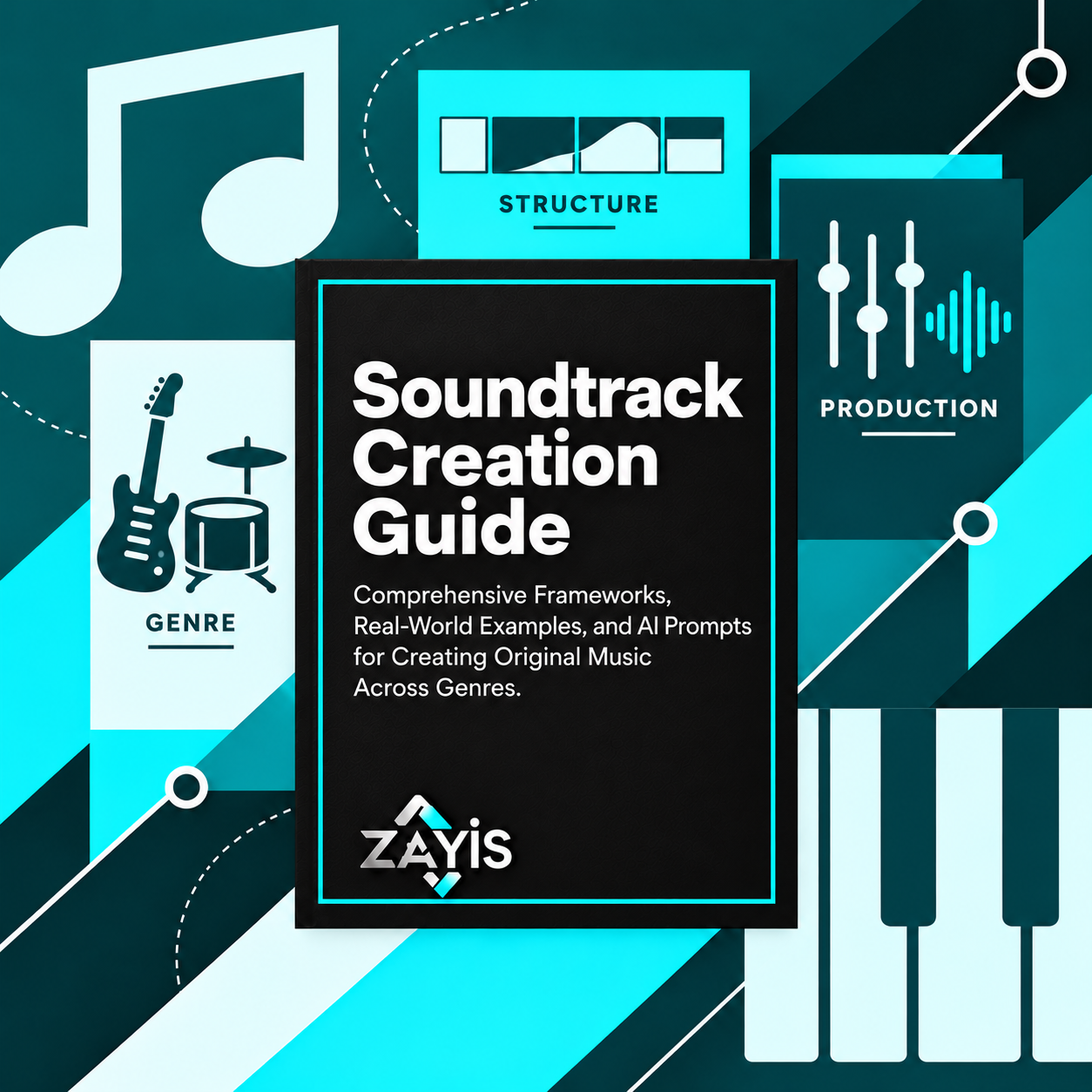
Soundtrack Creation Guide
You have a sound in your head, but turning it into a finished track is another challenge. A good song needs more than a catchy idea. It needs structure, progression, creative direction, and a reason for someone to keep listening.
Maybe you're creating music for a video, developing an original song, experimenting with a new genre, or producing background audio for a creative project. But how do you explain the sound you're imagining? What should happen during the introduction, verse, chorus, or drop? And how do you keep AI-generated music from sounding disconnected, repetitive, or unlike what you intended?
The Zayis Soundtrack Creation Guide helps you approach music creation with greater creative control. Use practical frameworks and structured AI prompts to develop original compositions, plan musical arrangements, explore genres, and organize a workflow for refining and releasing finished tracks.
What you can build:
A motivational trap or hip-hop track: Develop a song concept with a defined rhythm, lyrical direction, arrangement, energy progression, and memorable hook.
A lo-fi instrumental playlist concept: Plan mellow beats, cohesive atmosphere, consistent production characteristics, and tracks suitable for studying, working, or relaxed listening.
A cinematic orchestral soundtrack: Develop dramatic musical cues, emotional transitions, orchestral arrangements, and scene-specific compositions for videos, trailers, or storytelling projects.
An EDM or electronic dance track: Structure musical builds, transitions, drops, rhythmic patterns, and energy changes that give the production a clear progression.
An original rock, R&B, country, or jazz composition: Explore genre-specific instrumentation, vocal arrangements, songwriting approaches, and musical structures while developing your own creative identity.
A pop or short-form music concept: Create hook-focused song ideas and plan shorter edits for promotional videos, social content, or other creative applications.
A gospel or worship composition: Develop original Christ-centered lyrical themes, musical arrangements, and song structures intended for worship or inspirational projects.
Put your AI assistant to work with a clearer brief.
Each of the ten genre-focused strategies combines a practical framework, illustrative examples, structured AI prompts, and implementation guidance. Instead of asking AI to make a song that sounds good, you can specify the genre, emotional direction, instrumentation, lyrical themes, arrangement, and intended use.
Upload the PDF to a compatible AI assistant, describe your musical vision, preferred genre, production tools, and creative goals, then work through one composition or arrangement task at a time. Use compatible music production tools to develop the actual audio, review the results, and verify licensing and distribution rights before publishing.
What's included:
A 41-page PDF with 10 soundtrack creation strategies.
Frameworks for trap, hip-hop, lo-fi, cinematic orchestral music, and EDM.
Rock, alternative, R&B, soul, country, Americana, and jazz composition strategies.
Pop songwriting and gospel or worship music development frameworks.
A Finish, Export & Release section covering practical production and release considerations.
A 90-day implementation plan.
A Track Analysis & Production Brief.
A Track Review & Next Session resource.
Structured AI prompts, illustrative examples, and practical implementation guidance.
A task-based section finder, sources, and further reading.
Who it's for: Musicians, aspiring songwriters, producers, content creators, filmmakers, video editors, independent artists, and entrepreneurs exploring AI-assisted music creation.
Don't settle for generating random songs and hoping one matches your vision. Learn to describe the sound, shape the arrangement, and develop original music with greater purpose and creative control.