
 Image 1 of 1
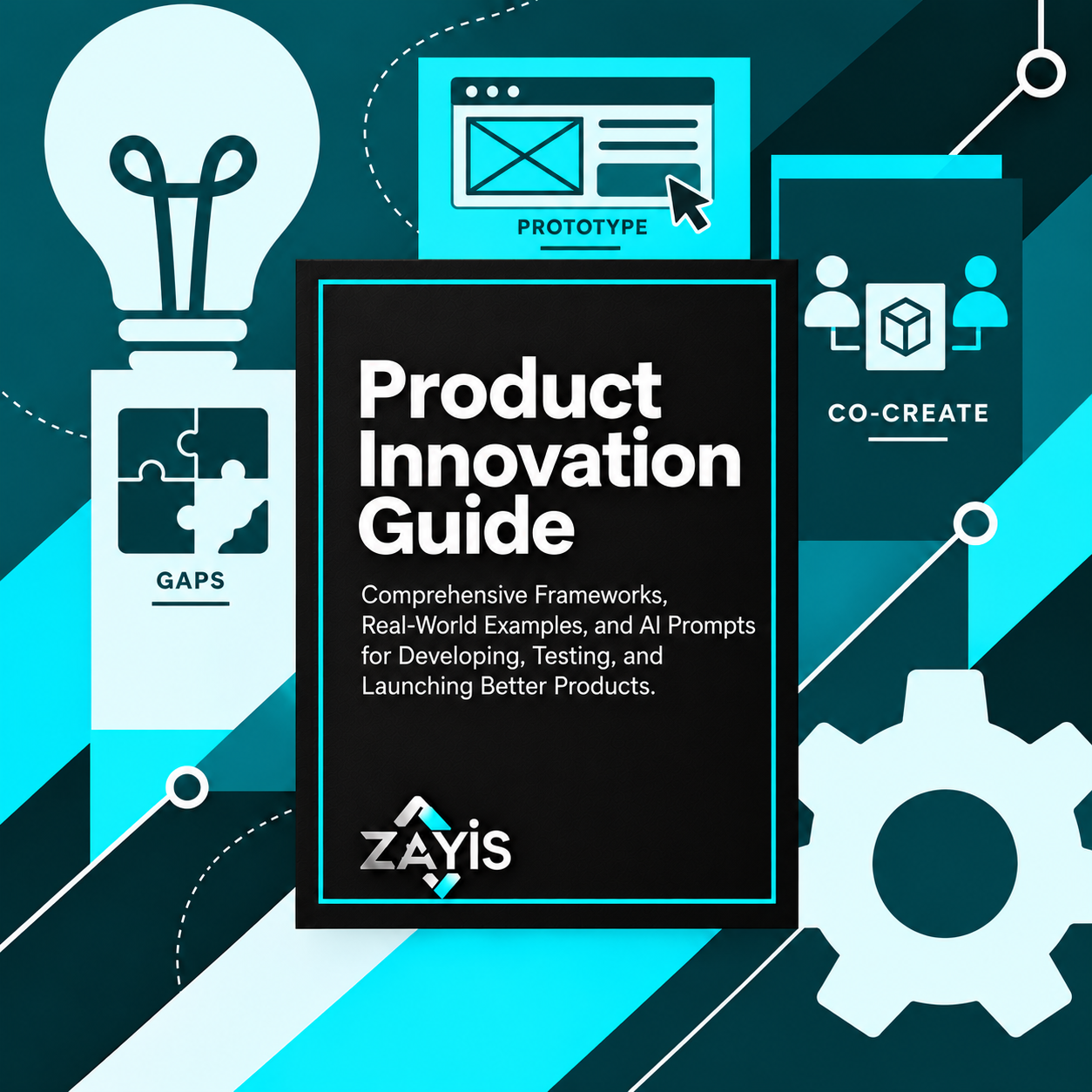
Product Innovation Guide
A clever product idea isn't automatically a business opportunity. Before investing in development, understand the problem, test what customers need, and identify which features deserve your time and money.
You have an idea for a product or a way to improve something that already exists. But is the problem important enough for customers to act? Which features should you build first? What are competitors overlooking? And how can you test a concept before committing to a full launch?
The Zayis Product Development & Innovation Guide helps you turn early ideas into a more disciplined development process. Use practical frameworks and structured AI prompts to research market opportunities, prioritize features, organize prototypes, involve customers, and plan evidence-based product launches.
What you can build:
A market gap assessment: Examine customer problems, competing solutions, and unmet needs to identify opportunities worth investigating.
A product feature prioritization scorecard: Compare potential features using customer value, development effort, cost, feasibility, and business relevance.
A customer co-creation and research plan: Develop appropriate interview questions, prototype feedback activities, and a process for gathering useful customer insights.
A rapid prototyping sprint: Define a testable concept, create a prototype plan, identify assumptions, and establish criteria for deciding what to improve.
A competitive feature comparison: Evaluate competing products to understand meaningful differences, feature gaps, and potential positioning opportunities.
A minimum viable product launch plan: Define the smallest useful offering, target early customers, outline marketing activities, and identify performance measures.
A post-launch improvement process: Organize customer feedback, product issues, usage evidence, and development priorities into a repeatable review cycle.
Put your AI assistant to work with a clearer brief.
Each section combines a product development framework, illustrative example, structured AI prompt, and implementation guidance. Instead of asking AI to invent a successful product, you can define customer problems, development constraints, known alternatives, and the evidence required to test your idea.
Upload the PDF to a compatible AI assistant, describe your concept, intended customer, budget, technical limitations, and development stage, then work through one product decision at a time. Verify safety, intellectual property, privacy, and compliance requirements before testing or launching products.
What's included:
A 36-page PDF with 12 product innovation and development sections.
A 90-day From Idea to Launch Rollout Plan.
A Concept Scorecard Worksheet.
Market gap identification and product feature prioritization frameworks.
Customer co-creation, rapid prototyping, and competitive feature analysis strategies.
Innovation brainstorming and minimum viable product launch planning.
Sustainability integration and patent and intellectual property research guidance.
Post-launch improvement and AI-assisted product development workflows.
Product safety, privacy, and compliance considerations.
A task-based section finder, sources, and verification notes.
Who it's for: Entrepreneurs, startup founders, product developers, inventors, makers, small business owners, and teams responsible for developing or improving products.
Don't invest everything in an idea before learning whether it solves a meaningful problem. Research the opportunity, build what matters, test your assumptions, and let evidence guide the next version.