
 Image 1 of 1
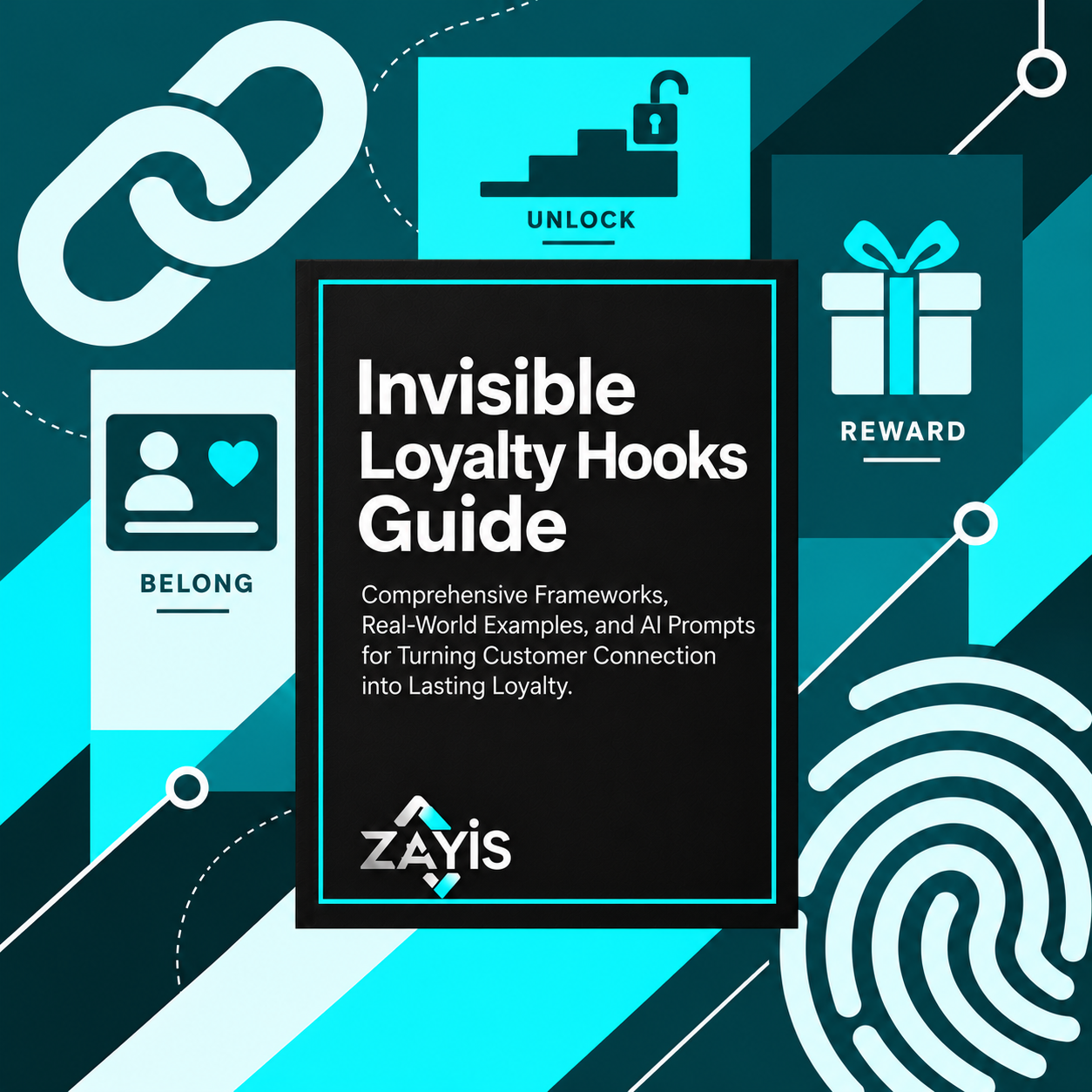
Invisible Loyalty Hooks Guide
Customers don't always stay because of discounts, loyalty points, or promotional emails. Sometimes they stay because your product has become part of their routine, identity, progress, or community. Learn how to create value that gives people a genuine reason to return.
A customer makes a purchase and disappears. Another enjoys your service but has little reason to remain engaged. You introduce a rewards program, but participation fades after the initial excitement. What makes a customer relationship meaningful over time? Which experiences encourage continued use? And how can you strengthen loyalty without creating unfair barriers to leaving?
The Zayis Invisible Loyalty Hooks Guide helps you explore those questions through behavioral psychology and customer experience design. Use structured AI prompts and practical frameworks to create loyalty mechanisms built around accumulated value, recognition, useful routines, and genuine customer benefits.
What you can build:
A customer identity and belonging strategy: Develop ways for customers to connect your product or community with interests, goals, and values that matter to them.
A progressive rewards and benefits plan: Design meaningful milestones, feature access, or accumulated benefits that give customers a reason to remain engaged.
An exclusive customer experience: Explore limited-access experiences, useful member benefits, and recognition programs without relying on misleading scarcity.
A product value accumulation system: Identify how customer preferences, saved work, personalization, or useful progress can make continued use more rewarding.
A customer ritual and engagement calendar: Develop recurring activities, helpful reminders, and repeatable experiences that fit naturally into customer routines.
A community loyalty initiative: Create opportunities for customers to share knowledge, participate in meaningful discussions, and connect around a common interest.
A loyalty measurement and testing plan: Compare customer retention, engagement, reward costs, and relevant outcomes to evaluate whether a loyalty mechanism is worth continuing.
Put your AI assistant to work with a clearer brief.
Each loyalty strategy combines a behavioral mechanism, illustrative example, copy-and-paste prompt, business-specific applications, and five-step implementation guidance. Instead of asking AI how to keep customers from leaving, you can focus on creating real benefits, improving ongoing experiences, and measuring whether customers find those experiences valuable.
Upload the PDF to a compatible AI assistant, describe your product, customer relationships, business model, and retention challenges, then work through one loyalty mechanism at a time. Keep customer choices transparent and avoid practices that deliberately trap people.
What's included:
A 38-page PDF with 10 customer loyalty frameworks.
A 90-day loyalty rollout plan.
A Loyalty Hook Planning Worksheet.
Strategies covering identity, progressive unlocks, exclusivity, accumulated value, and customer recognition.
Frameworks for reciprocal rewards, status, recurring rituals, community participation, and memorable customer experiences.
Guidance for measuring loyalty using business evidence and structured comparisons.
Business-type adaptations, illustrative examples, and five-step implementation instructions.
A task-based section finder, sources, and verification notes.
Who it's for: Entrepreneurs, subscription businesses, e-commerce brands, membership operators, product teams, customer experience professionals, and businesses seeking stronger long-term relationships.
The strongest customer loyalty isn't created by making it difficult to leave. It's earned by making the experience valuable enough that people want to stay.