
 Image 1 of 1
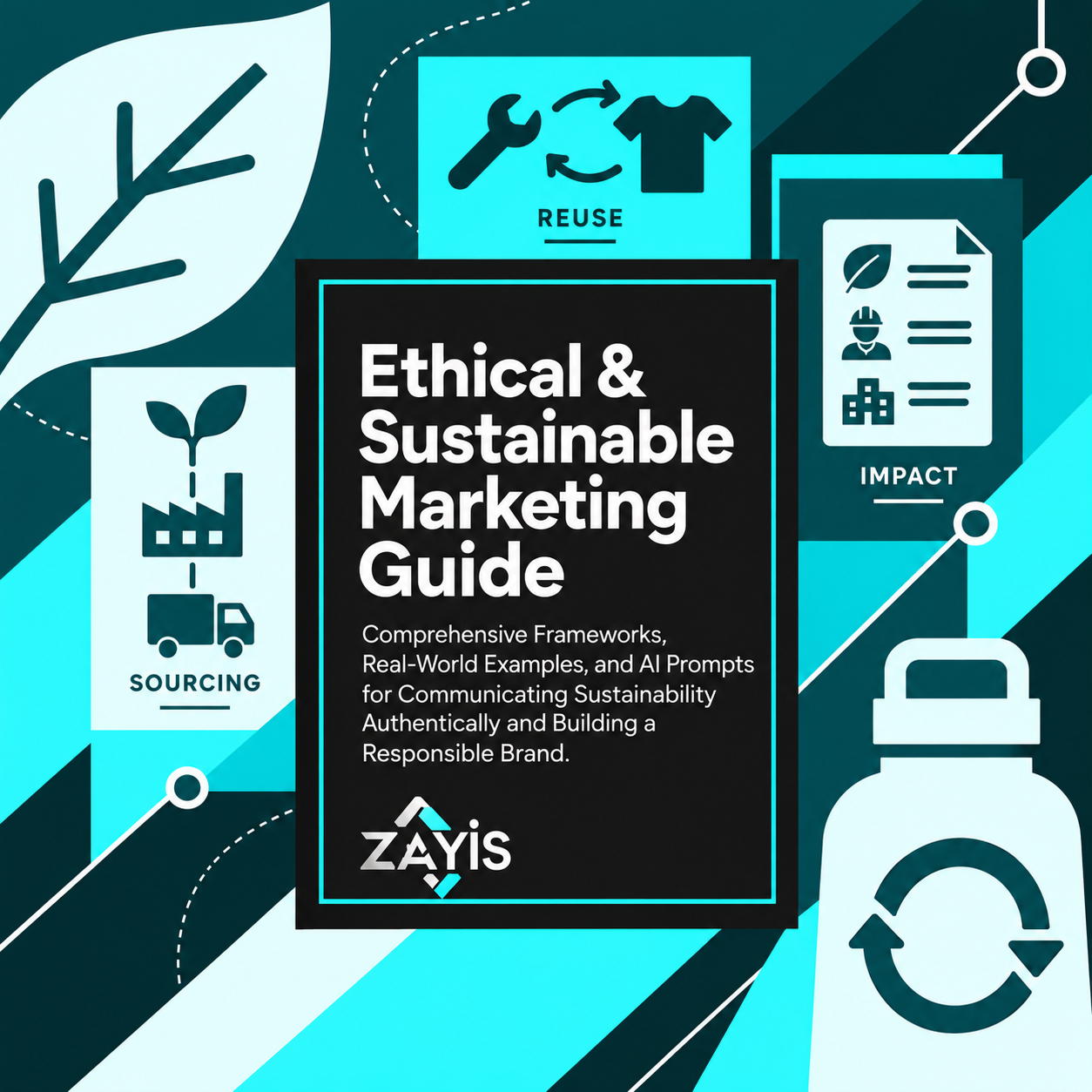
Ethical & Sustainable Marketing Guide
Customers are becoming more familiar with sustainability claims. A green label or inspiring statement isn't enough when people want to know what your business actually does. Give your brand's values something credible to stand on.
Perhaps your business uses less packaging, sources materials differently, supports community initiatives, or wants to introduce more responsible products. But how do you communicate those efforts without overstating their impact? What evidence supports your claims? And how do you turn responsible practices into meaningful customer communication?
The Zayis Ethical & Sustainable Marketing Guide helps you develop marketing strategies grounded in documented practices and realistic business decisions. Use structured AI prompts and practical frameworks to communicate sustainability efforts, plan responsible campaigns, and evaluate whether your claims match the evidence.
What you can build:
A sustainability brand story: Explain the people, practices, sourcing decisions, and verified improvements behind your products in language customers can understand.
An eco-innovation campaign: Develop a marketing plan around a genuine product or packaging improvement, including the evidence needed to explain its benefits.
A supply chain transparency map: Organize sourcing information, supplier details, production stages, and documentation that supports your public statements.
A cause-driven customer loyalty program: Explore ways customers could choose between personal rewards and a verified community or environmental contribution.
An impact report and educational content series: Translate documented results into understandable summaries, customer explanations, and useful content.
A circular economy initiative: Evaluate repair, refill, resale, reuse, or take-back concepts against operational costs, customer needs, and practical requirements.
A sustainability claims verification checklist: Review marketing language, supporting records, potential omissions, and greenwashing risks before publishing.
Put your AI assistant to work with a clearer brief.
Each strategy combines a practical framework, an illustrative example, a copy-and-paste prompt, and implementation guidance. Instead of asking AI to make your brand sound more sustainable, you can identify documented practices, measurable improvements, real limitations, and the information customers need to evaluate your claims.
Upload the PDF to a compatible AI assistant, describe your products and available evidence, and develop one sustainability communication or improvement initiative at a time. Verify environmental claims and obtain appropriate review where needed before publishing.
What's included:
A 36-page PDF with 10 ethical and sustainable marketing strategies.
A 90-day implementation plan.
A Campaign Analysis and Action Worksheet.
A Campaign Review and Next Move resource.
Frameworks for sustainability storytelling, product innovation, sourcing transparency, and ethical partnerships.
Waste reduction, circular economy, impact reporting, and educational campaign strategies.
An authenticity verification framework for reviewing public claims.
Illustrative examples, a section finder, and sources for further reading.
Who it's for: Entrepreneurs, product brands, e-commerce businesses, sustainability-focused companies, marketing professionals, and organizations developing responsible brand communication.
Don't ask customers to trust sustainability claims simply because they sound good. Show what your business is doing, explain what the evidence supports, and build credibility through transparency.