
 Image 1 of 1
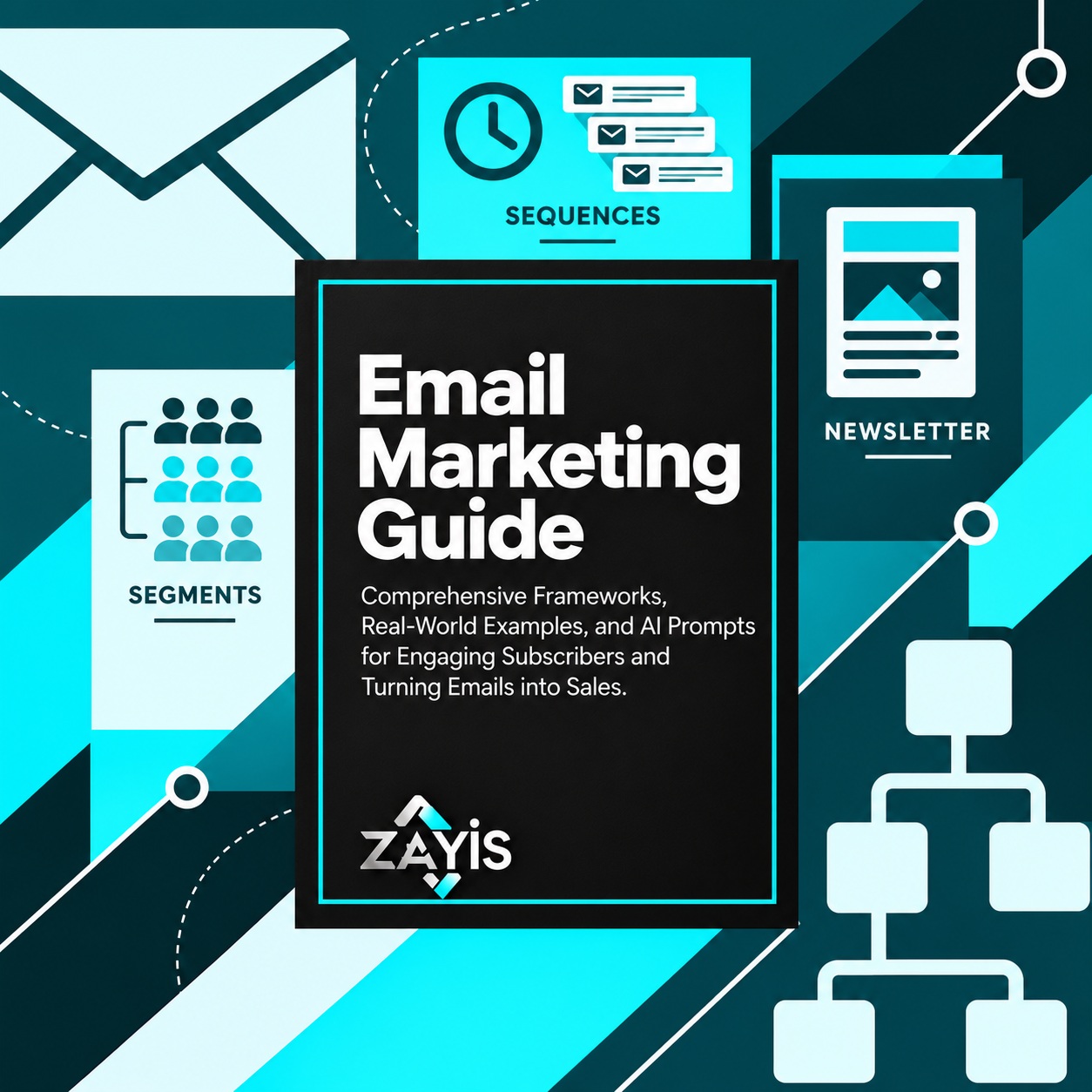
Email Marketing Guide
Getting someone to join your email list is only the beginning. If every subscriber receives the same message, or your emails give people no clear reason to act, you're leaving valuable customer relationships underdeveloped.
You have subscribers, past customers, or people who showed interest in your products. But what should you send them? How often should you follow up? What happens when someone abandons a cart, ignores your messages, or buys for the first time? And how do you know whether an email campaign is contributing to your business?
The Zayis Email Marketing Guide helps you answer those questions. Use practical frameworks and structured AI prompts to develop targeted email sequences, organize customer follow-up, and connect your campaigns to measurable business objectives.
What you can build:
A segmented email campaign: Organize eligible subscribers by meaningful interests, purchasing behavior, or customer needs, then develop messages relevant to each group.
A customer-focused email series: Create messages that address real frustrations, explain product benefits, and guide readers toward an appropriate next action.
An abandoned-cart recovery sequence: Draft reminder emails that address purchasing hesitation, provide relevant information, and direct interested shoppers back to checkout.
A product launch anticipation campaign: Plan teaser messages, launch announcements, customer education, and follow-up communication around an upcoming offer.
A testimonial-powered nurture flow: Use authentic customer experiences to address common questions and provide credible product information.
A post-purchase upsell and newsletter plan: Recommend relevant next products while maintaining a useful editorial approach that gives subscribers reasons to keep reading.
A subscriber re-engagement and performance review: Identify inactive contacts, investigate potential delivery issues, design an appropriate re-engagement campaign, and evaluate confirmed customer actions.
Put your AI assistant to work with a clearer brief.
Each email strategy combines a practical framework, an illustrative example, a copy-and-paste prompt, and implementation guidance. Instead of asking AI to write promotional emails without context, you can specify the audience, customer relationship, offer, sending conditions, and intended outcome.
Upload the PDF to a compatible AI assistant, describe your business, email platform, eligible subscribers, and campaign objective, then develop one email flow at a time. Review consent requirements, unsubscribe processes, customer claims, and automation rules before sending.
What's included:
A 30-page PDF with 10 email marketing strategies.
A 90-day implementation plan.
An Email Campaign Analysis and Action Worksheet.
An Email Campaign Review and Next Move resource.
Frameworks for segmentation, emotional messaging, cart recovery, and product launch emails.
Testimonial nurturing, ethical scarcity, post-purchase upselling, and newsletter strategies.
Subscriber re-engagement and campaign measurement guidance.
Illustrative examples, five-step implementation instructions, and a task-based section finder.
Sources and further reading.
Who it's for: E-commerce sellers, entrepreneurs, email marketers, digital product businesses, service providers, and brands seeking to develop stronger subscriber relationships.
Don't build an email list just to send more messages. Build a communication system that delivers useful information, respects your audience, and gives interested customers a meaningful next step.