
 Image 1 of 1
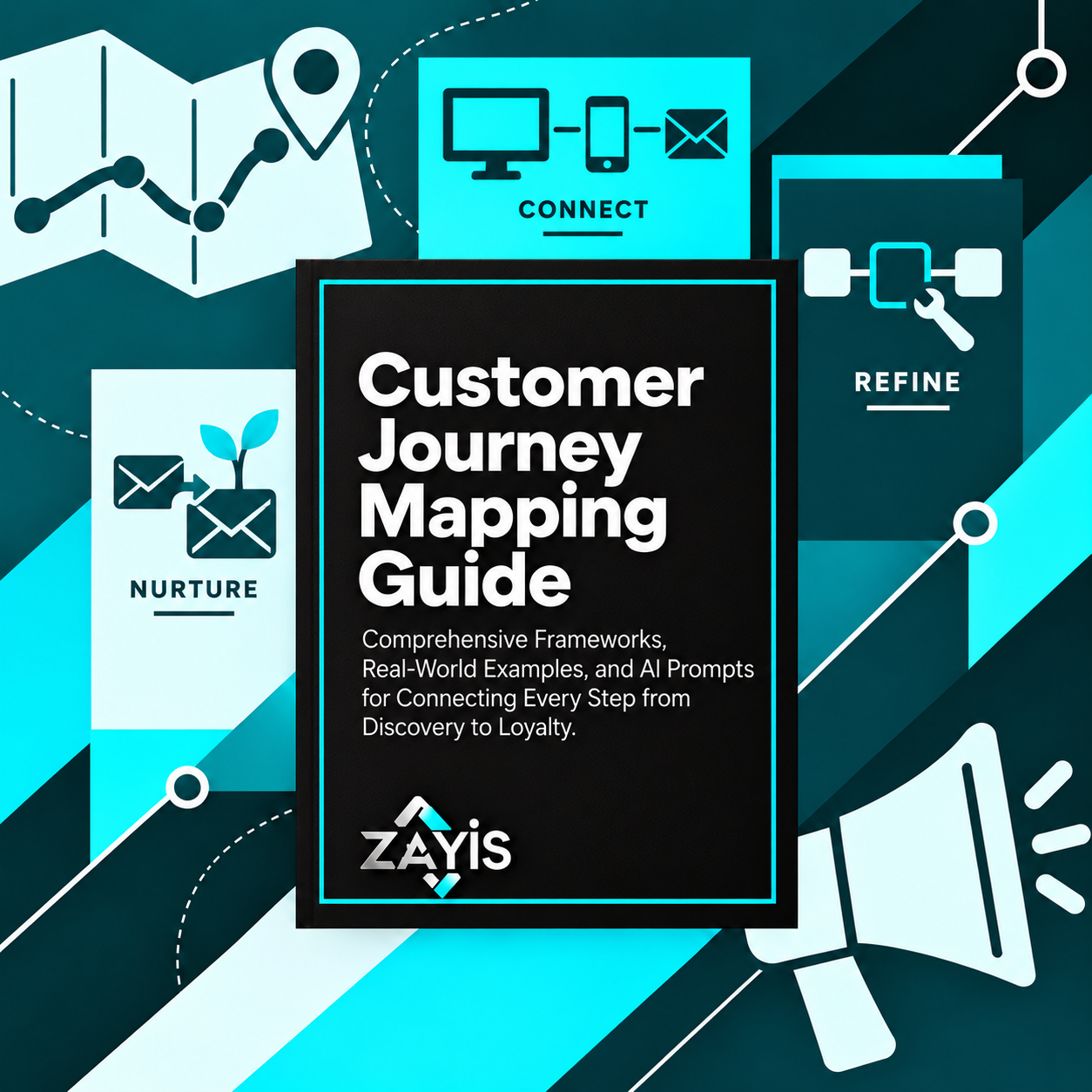
Customer Journey Mapping Guide
Customers rarely disappear without a reason. Somewhere between discovering your business, considering your offer, and completing a purchase, something may be making the next step harder than it needs to be. Find the friction before you lose the opportunity.
Someone visits your website but never contacts you. A potential buyer asks questions but doesn't purchase. A new customer buys once and never returns. What happened between those moments? Which questions went unanswered? And where could your business provide a better experience?
The Zayis Customer Journey Mapping Guide helps you connect those stages. Use practical frameworks and structured AI prompts to examine customer interactions, identify obstacles, improve communication, and develop a more consistent experience from first discovery through long-term loyalty.
What you can build:
An awareness-stage content map: Connect customer questions to relevant articles, advertisements, demonstrations, and entry points that introduce your offer.
A consideration-stage nurture sequence: Develop a series of useful messages and resources that help interested prospects evaluate their options.
A purchase decision improvement plan: Identify objections, unclear information, and checkout friction that may prevent customers from completing a transaction.
A post-purchase onboarding flow: Organize welcome messages, setup guidance, support resources, and the steps customers need to experience their first meaningful benefit.
A customer retention and churn prevention plan: Identify signs of disengagement, define appropriate follow-up actions, and determine when human assistance is needed.
A multi-channel customer journey map: Connect website visits, email, social media, support interactions, referrals, and other relevant touchpoints into a clearer customer experience.
A journey optimization audit: Document customer pain points, prioritize improvements, assign responsibilities, and evaluate whether changes help customers progress.
Put your AI assistant to work with a clearer brief.
Each strategy combines a customer journey framework, an illustrative example, a copy-and-paste prompt, and implementation guidance. The prompts help you define a customer segment, business objective, observed behavior, and the specific stage that needs attention.
Upload the PDF to a compatible AI assistant, describe your customer experience and available evidence, and work through one journey problem at a time. Distinguish observed customer behavior from assumptions and proposed improvements.
What's included:
A 29-page PDF with 10 customer journey mapping strategies.
A 90-day implementation plan.
A Journey Analysis and Action Worksheet.
A Journey Review and Next Move resource.
Frameworks covering awareness, consideration, purchase decisions, onboarding, retention, churn prevention, and advocacy.
Multi-channel journey mapping and customer pain-point analysis guidance.
A task-based section finder, illustrative examples, and implementation steps.
Sources and further reading.
Who it's for: Entrepreneurs, e-commerce brands, service businesses, customer experience professionals, marketers, and organizations seeking to improve how customers move through their business.
Don't make customers work harder to buy from you, understand your product, or get the help they need. Map the experience, find the friction, and improve the next step.