
 Image 1 of 1
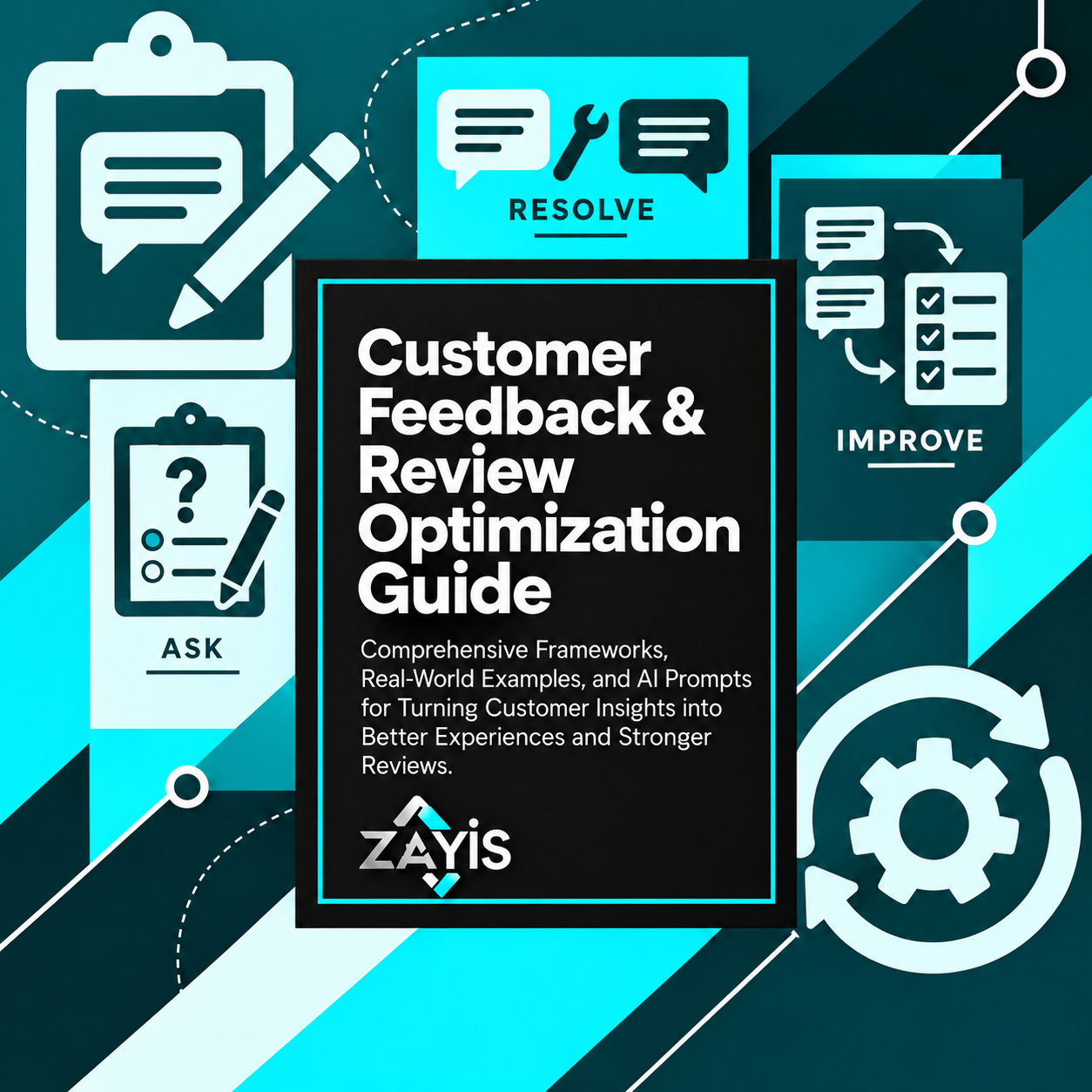
Customer Feedback & Review Optimization Guide
Your customers are already telling you what they think about your business. The question is whether you're collecting the right feedback, responding effectively, and turning what you learn into meaningful improvements.
A customer leaves a negative review. Another has a great experience but never shares it publicly. Your business receives feedback through emails, surveys, and conversations, but the same complaints keep appearing. What are customers really telling you? Which problems deserve immediate attention? And how can you turn their experiences into better service and stronger credibility?
The Zayis Customer Feedback & Review Optimization Guide helps you connect those decisions. Use practical frameworks and structured AI prompts to collect useful feedback, respond professionally, identify recurring issues, and develop review strategies grounded in genuine customer experiences.
What you can build:
A post-purchase feedback email: Develop a short, relevant message that encourages customers to share their experience and makes it easy to identify what worked and what needs improvement.
A negative review recovery response: Prepare professional public replies and private follow-up messages that acknowledge legitimate concerns, explain appropriate next steps, and avoid defensive language.
A customer satisfaction survey: Design focused questions that uncover product concerns, service gaps, purchasing frustrations, and opportunities for improvement.
An ethical review generation campaign: Create a consistent process for requesting honest reviews from eligible customers without selectively soliciting positive feedback.
A customer testimonial video brief: Develop interview questions, storytelling prompts, and production guidance for presenting authentic customer experiences with appropriate permission.
A review monitoring and analysis dashboard plan: Organize feedback from relevant sources, categorize recurring themes, and track changes in customer satisfaction over time.
A quarterly feedback improvement plan: Prioritize recurring problems, assign corrective actions, and evaluate whether changes address the issues customers raised.
Put your AI assistant to work with a clearer brief.
Each strategy combines a practical framework, an illustrative example, a copy-and-paste prompt, and implementation guidance. Instead of asking AI to generate positive reviews, you can develop legitimate feedback requests, analyze real customer comments, prepare professional responses, and organize improvements.
Upload the PDF to a compatible AI assistant, describe your business and feedback challenges, and work through one review or customer experience task at a time. Use anonymized examples where appropriate and never fabricate customer testimonials.
What's included:
A 31-page PDF with 10 customer feedback and review optimization strategies.
A 90-day Feedback-to-Action Plan.
A Feedback Analysis and Action Worksheet.
Frameworks for post-purchase feedback, satisfaction surveys, review requests, and negative review recovery.
Testimonial video, in-store review station, and social proof integration strategies.
Review monitoring, customer spotlight, and quarterly feedback analysis guidance.
Illustrative examples, implementation instructions, and a task-based section finder.
Sources and further reading.
Who it's for: Small business owners, e-commerce sellers, service businesses, hospitality operators, customer experience teams, and marketers seeking to improve customer satisfaction and online reputation.
Don't collect feedback just to know what customers think. Use it to understand what matters, improve what isn't working, and give future customers stronger reasons to trust your business.