
 Image 1 of 1
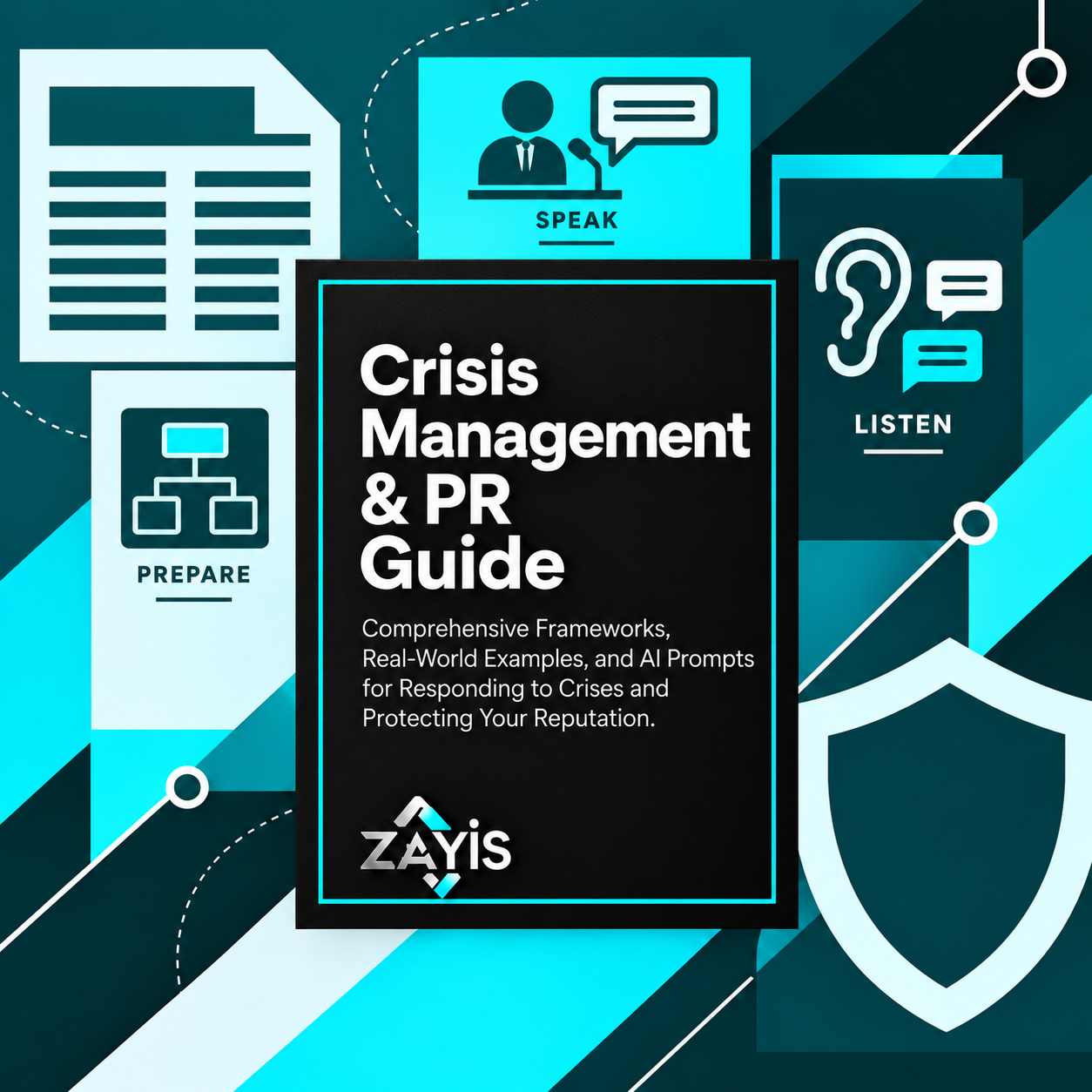
Crisis Management & PR Guide
When a crisis reaches your business, the wrong response can create additional problems. But having no response plan can be just as damaging. Prepare your people, your procedures, and your communication before the pressure arrives.
Imagine a serious customer complaint gaining attention online, an operational incident disrupting service, or a public allegation requiring an immediate response. Who takes responsibility? What information needs verification? Who should be contacted? And what can your organization responsibly say while the facts are still developing?
The Zayis Crisis Management & PR Guide helps you organize those decisions. Use structured frameworks and AI prompts to prepare communication procedures, coordinate stakeholders, and develop practical plans for handling difficult situations.
What you can build:
A crisis response framework: Define incident responsibilities, communication approval procedures, escalation rules, and immediate priorities for different crisis scenarios.
An initial public response and update sequence: Draft factual acknowledgment messages, planned updates, and social media communications appropriate to the situation.
An internal communication plan: Organize employee notifications, management updates, information-sharing responsibilities, and urgent staff questions.
A press release and spokesperson Q&A brief: Prepare accurate messaging, anticipate difficult questions, and establish what can be confirmed publicly.
A stakeholder reassurance plan: Develop tailored communication approaches for customers, partners, investors, and other affected groups.
A social listening and escalation protocol: Identify concerning developments, monitor relevant conversations, and route significant issues to the appropriate decision-makers.
A crisis simulation and recovery review: Practice response scenarios, evaluate readiness, document commitments, and identify improvements after an incident.
Put your AI assistant to work with a clearer brief.
Each crisis communication strategy combines a framework, illustrative scenario, copy-and-paste prompt, and implementation guidance. Rather than asking AI to "write a crisis statement," you'll have a structured approach to identifying affected audiences, gathering verified facts, establishing responsibilities, and developing appropriate communication drafts.
Upload the PDF to a compatible AI assistant, describe your organization, response team, potential risks, and planning scenario, and work through one preparedness task at a time. Have qualified personnel review sensitive communications and prioritize operational, legal, and safety obligations when an actual incident occurs.
What's included:
A 27-page PDF with 10 crisis management and PR strategies.
A 90-day crisis preparedness plan.
A Crisis Response Analysis and Action Worksheet.
Frameworks for rapid-response communication, internal updates, press releases, stakeholder reassurance, and spokesperson preparation.
Social listening, post-crisis recovery, simulation, and visual messaging guidance.
Illustrative scenarios, practical implementation instructions, and a task-based section finder.
Sources and further reading.
Who it's for: Entrepreneurs, small business owners, operations managers, organizational leaders, public relations professionals, and businesses seeking stronger crisis communication readiness.
You cannot control every problem your business may face. But you can prepare how your team gathers facts, makes decisions, communicates responsibly, and works toward recovery.