
 Image 1 of 1
ASMR & Sensory Branding Guide
Your customers can forget an advertisement seconds after seeing it. But the sound, texture, and experience surrounding a product can give them something more distinctive to remember. Make the details of your brand intentional.
Think about the sound of opening premium packaging, the texture of a product, or a satisfying close-up video that makes someone want to watch a little longer. What sensory experience does your business create? Is it recognizable? Could it become part of your content and customer experience?
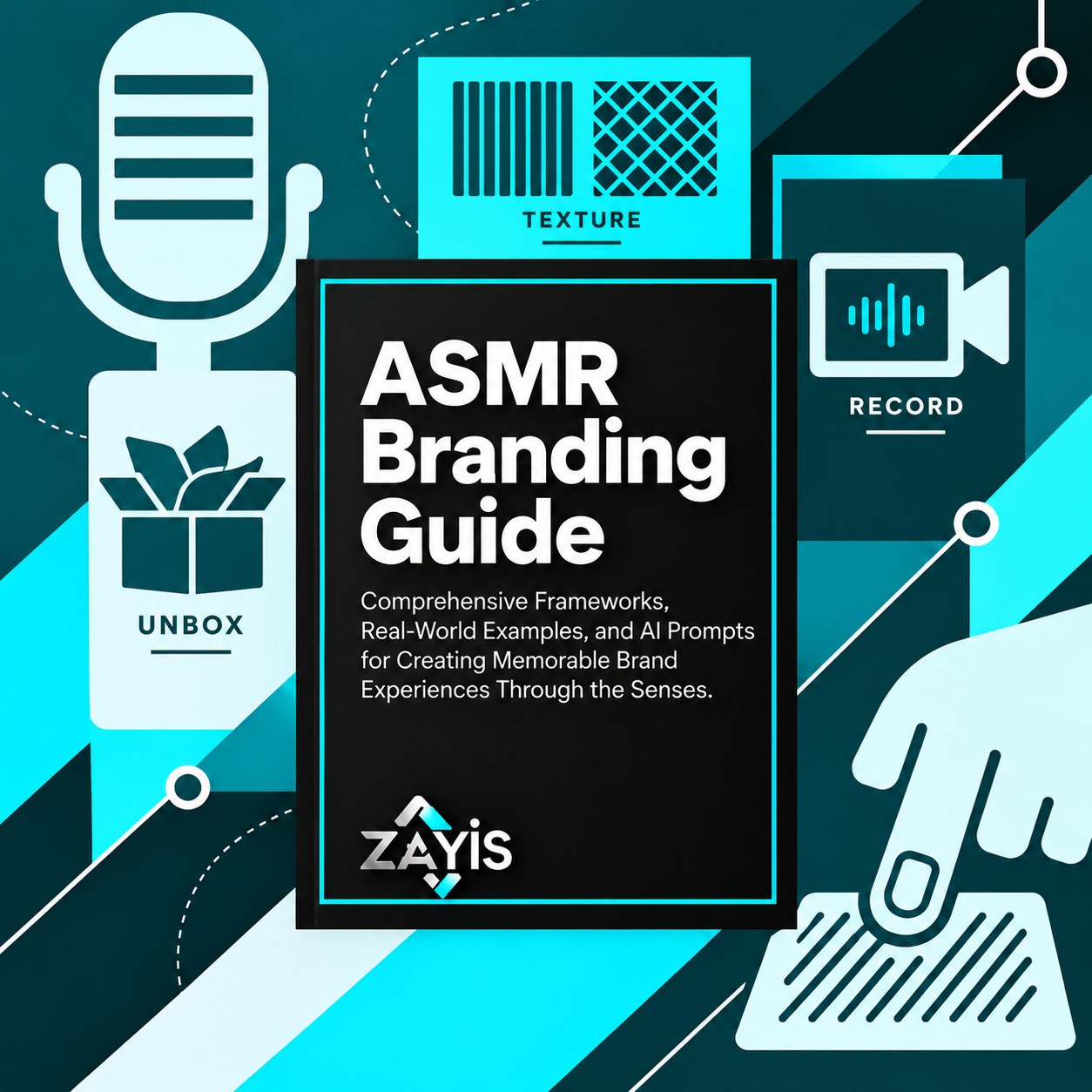
The Zayis ASMR & Sensory Branding Guide helps you explore those opportunities. Use practical frameworks and structured AI prompts to design sensory brand experiences, develop ASMR content, and turn everyday product interactions into purposeful creative assets.
What you can build:
A multi-sensory unboxing experience: Plan the order of packaging reveals, textures, sounds, and visual details that shape a customer's first interaction with your product.
A signature brand sound concept: Explore audio cues, product sounds, and sonic elements that could help create a recognizable brand experience.
A 60-second ASMR video script: Develop a shot-by-shot sequence with sound direction, product actions, pacing, and a subtle call to action.
An ASMR sound library and trigger map: Organize recordings, identify useful sounds, establish file-naming conventions, and plan simple audience preference tests.
An immersive sensory campaign: Develop ideas involving product texture, taste, scent, color, or physical experiences that fit your brand and audience.
A 12-week ASMR content series: Plan repeatable recording concepts, publishing themes, and a manageable production workflow.
A sensory accessibility and comfort plan: Consider captions, content notes, audio intensity, and low-sensory alternatives for people with different preferences.
Put your AI assistant to work with a clearer brief.
Each section combines a practical framework, illustrative example, copy-and-paste prompt, ASMR application, and implementation guidance. The prompts help you describe the product, sensory experience, audience, creative limitations, and intended outcome.
Upload the PDF to a compatible AI assistant, explain your product, brand personality, available equipment, and content goals, then develop one sensory concept or recording plan at a time.
What's included:
A 42-page PDF with 14 sensory branding and ASMR sections.
A 90-day sensory branding rollout plan.
A Sensory Audit Worksheet.
An ASMR Shot-and-Sound Script Template.
A worked 60-second ASMR script and 12-week content series example.
Recording guidance covering equipment, microphone placement, editing, and audio considerations.
Sensory accessibility and responsible-use guidance.
A section finder and sources for further reading.
Who it's for: Product brands, e-commerce businesses, content creators, hospitality operators, marketers, and entrepreneurs exploring distinctive customer experiences.
Don't limit your brand to what customers see. Explore what they hear, feel, and experience, and turn those details into something worth remembering.