
 Image 1 of 1
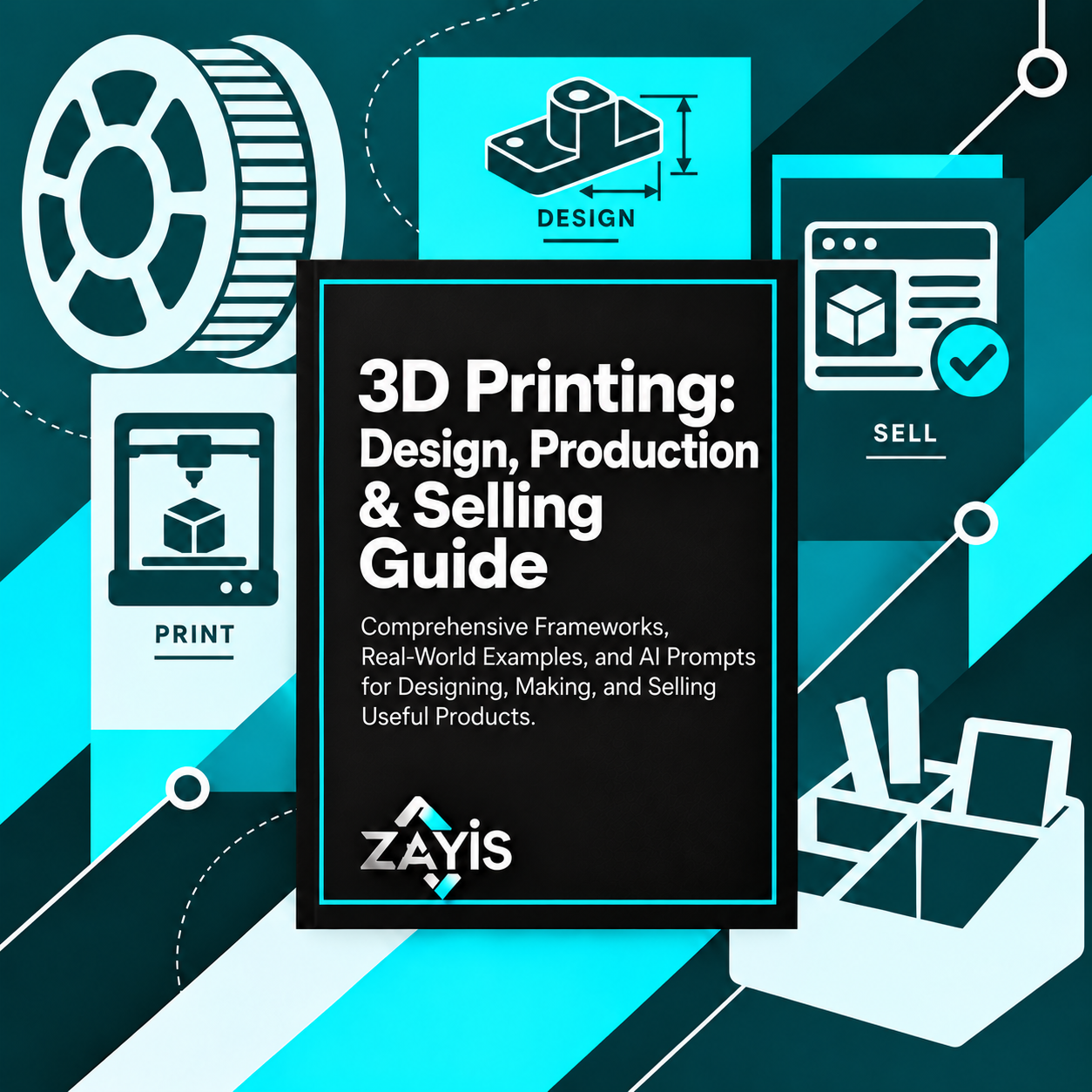
3D Printing: Design, Production & Selling Guide
Owning a 3D printer doesn't automatically mean you have a product worth selling. A successful design must solve a real problem, work reliably, and cost less to produce than customers are willing to pay. Start with usefulness, not just another printable object.
You have an idea for a product, accessory, replacement part, or custom design. But is 3D printing the right production method? How do you turn the idea into accurate dimensions? What should you test before producing more units? And how do you price a finished item when materials are only one part of the cost?
The Zayis 3D Printing: Design, Production & Selling Guide helps you work through the entire process. Use practical frameworks, structured AI prompts, and a hands-on CAD workshop to investigate product opportunities, develop prototypes, improve print quality, and evaluate whether an item is suitable for sale.
What you can build:
A 3D-printable product opportunity assessment: Identify customer problems, examine possible solutions, and evaluate whether a printed product offers a practical advantage.
A dimensioned product design brief: Define the product's intended use, measurements, material requirements, equipment limitations, and acceptance criteria before modeling.
A CAD-based desk organizer prototype: Follow a practical workshop that demonstrates how to create a dimensioned design and prepare it for further testing.
A prototype testing and failure analysis system: Document fit, function, print defects, material behavior, and the changes needed before another production attempt.
A controlled product revision plan: Use observed test results to prioritize improvements instead of changing several design features without understanding their effects.
A complete product costing worksheet: Account for filament, machine time, labor, failed prints, packaging, fees, and other relevant costs when evaluating a potential selling price.
A production quality and product listing plan: Establish inspection procedures, document verified product features, and develop accurate descriptions based on what the finished product can actually do.
Put your AI assistant to work with a clearer brief.
Each of the ten strategies combines practical development guidance, structured AI prompts, illustrative examples, and implementation steps. Instead of asking AI to design a profitable 3D-printed product, you can work through customer needs, design specifications, printer constraints, prototype evidence, and realistic production costs.
Upload the PDF to a compatible AI assistant, describe your printer, materials, design software, experience, and proposed product, then work through one design or production problem at a time. Use CAD and slicing software to create and inspect actual models, and verify safety, intellectual property, and product requirements before selling.
What's included:
A 41-page PDF with 10 design, production, and selling strategies.
A hands-on CAD workshop for modeling a desk organizer.
Guidance covering additional prototype variations, CAD views, print-file preparation, and slicing checks.
A worked batch costing example.
A Production & Listing Checklist.
A 90-day Design, Production & Selling Plan.
A Design Brief Worksheet.
A Prototype Test Sheet.
A Failure Log and Revision Tracker.
A Costing Worksheet and Production Analysis & Action Worksheet.
A task-based section finder, illustrative examples, sources, and further reading.
Who it's for: 3D printing hobbyists, aspiring product sellers, makers, entrepreneurs, small manufacturers, and individuals interested in designing and testing practical physical products.
Don't measure your 3D printing progress by how many objects you produce. Build products that solve useful problems, survive meaningful testing, and make financial sense before you scale production.